 Tebing
Footwork in Rock Climbing: The Secret to Climbing Without Tiring Fast
Leg muscles are much bigger and stronger than arm muscles. Good climbers climb with their feet: the arms keep balance while the legs push the body up.
Precision beats power
Watch the foothold until the tip of your shoe has really landed, then place your foot slowly and exactly. A careless foot slips easily and makes your hands work harder. A drill coaches love is quiet feet: climbing easy routes without any sound of your shoes hitting the wall.
Edging and smearing
- Edging: standing on small edges with the side of your shoe. The inside edge, under the big toe, is used most. The outside edge is for when your body is side-on to the wall.
- Smearing: pressing the sole onto an almost featureless surface and trusting the rubber's friction. Drop your heel and put your weight right over your foot so the sole sticks.
Hips close to the wall, arms straight
The closer your hips are to the wall, the more of your weight your feet carry. On steep walls, turn side-on so your hip touches the wall and your reach gets longer. Keep your arms straight while you wait or shuffle, because hanging on bones and joints is far cheaper than holding yourself up with bent arms.
Advanced footwork
- Flagging: sticking one leg out to the side without a foothold to counterbalance, so your body doesn't swing away from the wall.
- Drop knee: turning the knee in and down so your hip presses into a steep wall and your hand can reach higher.
- Heel hook: hooking your heel over a hold and pulling, as if your foot were a third hand.
- Toe hook: hooking the top of your toes under a hold to hold your body in, useful on roofs and very steep walls.
- High step and rock-over: lifting a foot high, then moving your weight over it as you stand up.
Resting mid-route
Look for positions where your feet carry most of your weight, such as standing on a big foothold with straight arms. From there, let go with one hand and shake it downward (shake out) so the blood flows back, then switch hands. On steep walls, experienced climbers sometimes lock a knee between two features (kneebar) to rest without hands.
Choosing climbing shoes
Good footwork needs the right shoes. For beginners, pick a flat shoe that is comfortable enough to wear for a while. Shoes that curve downward (downturned or aggressive) make standing on steep walls easier, but suit experienced climbers better. The fit should be snug: no empty space at the toes, but no sharp pain either. Sizes vary between brands, so try shoes on before you buy. Look after the soles by wiping off dust, and don't walk around outside in them, because dirty rubber loses its grip.
Simple drills
- Traversing sideways close to the ground while focusing fully on your feet.
- Climbing easy routes as slowly as possible, paying attention to every foothold.
- Climbing easy routes with your hands only touching holds for balance, not to pull.
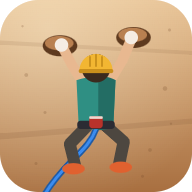
In Tebing your feet move by themselves: they find small edges or holds you have passed and push your body up. Notice how strength recovers when two hands hold on and your feet are planted, and how quickly it drains under a rock roof with no footholds. That is why real climbers rely so much on their feet.
Safety note: this article is general information. Real rock climbing carries a risk of injury. Learn in person from certified instructors, climbing gym staff, or local clubs and federations (in Indonesia, the FPTI).