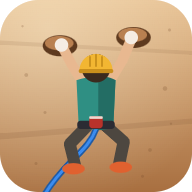
 Tebing
Dynos, Deadpoints, and Matching: Moving to Faraway Holds
Most climbing moves are static: slow and controlled. But sometimes the next hold is too far away, and the only way is to move dynamically.
Static or dynamic?
A static move can be stopped halfway: you reach for the hold while your body stays stable. A dynamic move uses momentum; once you start, you have to finish. Dynamic moves are often cheaper for long distances, as long as they are done well.
Deadpoint
A deadpoint is a small dynamic move. You push your body up, and right when it pauses at the top of the motion (the dead point), your hand snatches the next hold. Your feet stay on. Timing is everything: grabbing too early or too late makes the hold feel much harder.
Dyno
A dyno (short for dynamic) is a jump where your whole body flies and your feet usually leave the wall too. The steps:
- Pick the target and make sure your feet are on solid holds.
- Load the spring: sink your hips with straight arms.
- Push and pull in one motion: legs drive, arms pull toward the target.
- Keep your eyes on the target until your hand touches it.
- Catch and tense up so the swing after landing doesn't rip you off.
In a double dyno, both hands let go and catch at the same time. It shows up a lot in modern bouldering competitions.
When not to jump
- When your last protection is far below, because the fall can be long.
- Close to the ground without mats or a spotter.
- When your fingers and shoulders are tired. Most injuries happen on forced dynamic moves.
Training dynamic moves
Start with small deadpoints on easy routes, then increase the distance little by little. Practice your first jumps to big holds such as jugs in a matted bouldering area, so you can focus on timing and direction without fear of falling. A strong core (abs and back) helps absorb the swing after landing, while strong shoulders keep the joints stable as you catch. Filming yourself from the side helps a lot to see whether you grab too early or too late.
Matching: two hands on one hold
To match means to put both hands on the same hold. It is used to switch hands, traverse sideways, or set up the next move with the right hand. To make room, the first hand leaves space on the hold. If the hold is small, the second hand's fingers can slide in one by one as the first hand's fingers lift off.
On real rock there are also cross-through moves, where one hand passes the other. Crossing can be faster, but it twists your body and often costs more strength, especially on steep walls. That is why matching is usually the more stable choice.
Safety
- Warm up your shoulders and fingers before trying dynamic moves.
- When bouldering, make sure mats cover the fall zone and a friend is spotting you.
- When lead climbing, keep the rope in front of your leg, not behind your calf, so you don't flip upside down in a fall.
- Dyno: hold the reaching hand until the other hand has finished pulling your body up, then release the pulling hand. You launch toward the target hold.
- Match: hands can't cross in Tebing. To switch sides, a hand automatically matches onto the other hand's hold first, then the other hand moves on.
- Two-hand jump: with both hands on the same hold, release both buttons at once to jump straight up, much like a double dyno.
Safety note: this article is general information. Real rock climbing carries a risk of injury. Learn in person from certified instructors, climbing gym staff, or local clubs and federations (in Indonesia, the FPTI).