 Tebing
Rock Climbing Safety: Helmets, Ropes, Belaying, and Communication
Modern climbing gear is extremely reliable. Most accidents don't happen because equipment breaks, but because of small mistakes that could have been prevented. Make these safe habits part of every climb.
Partner check before every climb
Before starting, the climber and belayer check each other (partner check):
- Harnesses are on correctly, not twisted, with buckles fastened as the maker instructs.
- The climber's knot, usually a figure eight follow-through, passes through both tie-in points, is neatly dressed, and has a long enough tail.
- The rope in the belay device runs the right way and the belay carabiner is locked.
- The bottom end of the rope has a stopper knot so it can't slip through the belay device while lowering.
- Helmets are on and buckled.
Why helmets matter
A helmet protects your head from rocks or objects falling from above, and from impacts when you fall upside down or swing into the wall. On real rock, helmets are also a must for belayers and anyone waiting below.
Belay basics
- The belayer watches the climber fully, not a phone or a conversation.
- The brake hand never lets go of the rope.
- Stand fairly close to the wall and slightly to the side of the route, out of the line of falling rock.
- When leading, give just enough slack as the climber clips a quickdraw, then take it back in.
- Lower the climber slowly and smoothly, without jerks.
Falling while lead climbing
When leading, a climber falls roughly twice the distance above the last protection, plus rope slack and the stretch of the dynamic rope. A few habits make falls safer:
- Keep the rope in front of your leg, never behind your calf.
- Clip quickdraws the right way, and avoid pulling up rope from below the previous clip (a z-clip).
- As you fall, push slightly away from the wall and get your feet ready for the swing back in.
- An experienced belayer gives a soft catch so the climber doesn't slam into the wall.
Clear calls
Climbers and belayers should agree on short calls before starting. Many places use these:
| Call | Meaning |
|---|---|
| "On belay?" – "Belay on." | The climber asks if the belayer is ready; the belayer confirms. |
| "Climbing." – "Climb on." | The climber starts; the belayer gives the go-ahead. |
| "Take!" | Take in the rope and hold — the climber wants to hang on the rope. |
| "Slack!" | Give out some rope. |
| "Lower." | Lower the climber. |
| "Off belay." | The climber is safe and no longer needs a belay. |
Other languages have their own calls (in Indonesian, for example "Siap?", "Tarik!", "Kendor!", and "Turun!"), and any set works as long as both partners agree before climbing. On crags made noisy by wind or rivers, agree on rope-tug signals too.
Hazards on real rock
- Loose rock: tap doubtful rock before you grab or stand on it, and warn people below if anything comes loose.
- Falling rock: don't stand or rest directly under another climber.
- Weather: rain makes rock slippery and ropes heavy; stop climbing when there is lightning.
- Old protection: avoid rusty or loose bolts and report them to the crag managers or local community.
Learn from the right people
Belaying and lead climbing shouldn't be learned from videos alone. Take a course from certified instructors, climbing gym staff, or a local club or federation. There you can practice falling and catching falls safely under supervision.
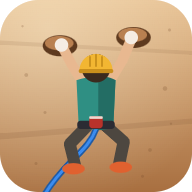
Tebing handles some of these rules for you: the rope clips to a bolt about every 3 meters, the last bolt catches you when you fall, and the belayer lowers you to a checkpoint. Your helmet stops falling rocks, but your arms still lose strength. Rain makes holds wet so your arms tire faster, just like slippery rock in the real world.
Safety note: this article is general information. Real rock climbing carries a risk of injury. Learn in person from certified instructors, climbing gym staff, or local clubs and federations (in Indonesia, the FPTI).